

Moving to Boise, Idaho in 2026: Here’s What No One Tells You
If you are researching a move to the Treasure Valley in 2026, you have likely already looked at the median home prices, checked out the property tax rates, and mapped the commute from Meridian to downtown Boise.
But data on a spreadsheet cannot tell you what it actually feels like to live here.
Most out-of-state buyers arrive with a few preconceived notions about Idaho (usually involving potatoes, endless pine forests, and brutal winters). The reality of daily life in the Boise metro area is vastly different.
If you are packing up and relocating to the Treasure Valley this year, here is the ultimate lifestyle guide covering the high-desert climate, the unique local culture, and what no one tells you about living in Boise.
1. The "10 PM Summer Sunset" Phenomenon
This is the single greatest shock for new residents moving from the East Coast or the South. Because Boise sits on the far western edge of the Mountain Time Zone and at a relatively northern latitude, our summer days are incredibly long.
In late June and July, the sun officially sets around 9:30 PM. However, because of the lingering twilight, it stays light outside well past 10:00 PM.
- The Lifestyle Impact: This completely fundamentally changes how you live in the summer. You can log off work at 5:00 PM and still have five full hours of daylight to float the Boise River, mountain bike the foothills, or sit on the patio of a restaurant in Eagle. The "evening" simply lasts longer here.
2. We Are a High-Desert (Say Goodbye to Humidity)
A common misconception is that all of Idaho looks like a dense, mountainous pine forest. While the mountains are just an hour north, the Treasure Valley itself is a high-desert, semi-arid climate.
We only receive an average of 11 inches of precipitation a year.
- The "Dry Heat": During July and August, afternoon temperatures frequently climb into the upper 90s and low 100s. However, the afternoon humidity often drops to 15% or lower. You will not experience the suffocating, sweat-through-your-shirt mugginess of Texas or Florida.
- The Rapid Cool-Down: Because desert air does not hold heat, the moment the sun goes down, the temperature plummets. A blistering 98-degree afternoon will frequently drop to a perfectly comfortable 65 degrees by the time you go to bed.
3. The Outdoor Culture is Mandatory
In the Treasure Valley, the outdoors is not just a weekend hobby; it is a core part of the local identity. Even if you do not consider yourself an "outdoorsy" person now, the accessibility of nature will likely change your habits.
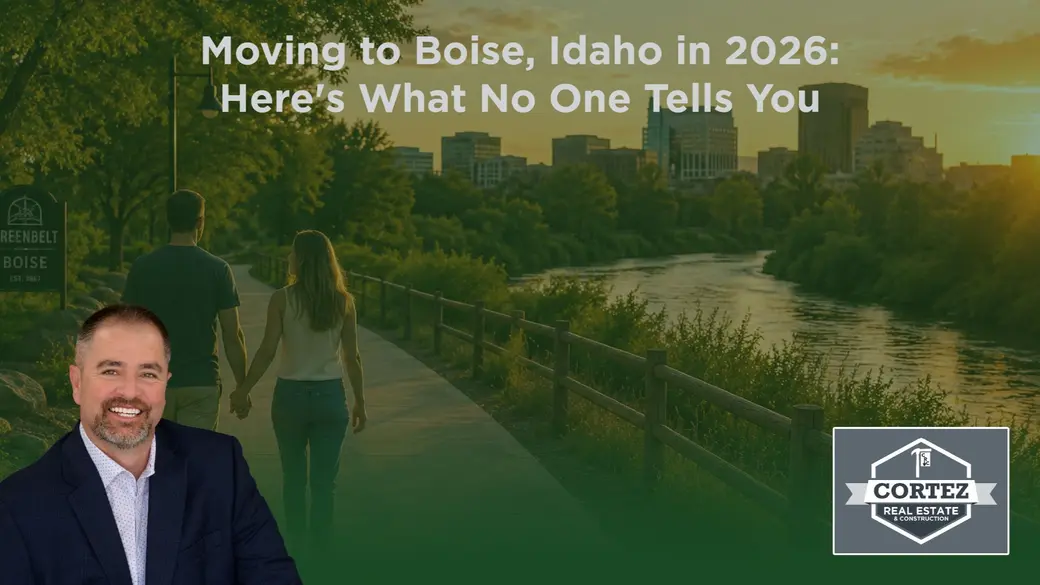
- The Boise River Greenbelt: This is the crown jewel of the valley. It is a 25-mile paved pathway that follows the river through the heart of Boise, Garden City, and Eagle. It is constantly packed with cyclists, runners, and people walking their dogs.
- Ridge to Rivers: Over 200 miles of interconnected trails weave through the Boise foothills, offering world-class hiking and mountain biking just minutes from downtown.
- Bogus Basin: Located just 45 minutes up a winding mountain road from Boise, Bogus Basin offers accessible winter skiing and summer mountain biking without the massive crowds or resort prices of Sun Valley.
Real Estate Tip: This outdoor culture directly impacts housing. It is why homes with 3-car garages, RV bays, and dedicated "mudrooms" to store skis, bikes, and kayaks command such a massive premium in the Treasure Valley.
4. Winters Are Milder Than You Think (But Watch Out for the "Inversion")
When you tell friends you are moving to Idaho, they will likely warn you about the brutal winters. They are thinking of the Rocky Mountains, not the Treasure Valley.
The mountains to our east act as a massive barrier, blocking the brutal, below-zero Arctic air masses that freeze the Midwest.
- The Snow: Boise averages around 20 inches of snow a year. However, because we frequently hover just above freezing during the day, the snow in the valley floor usually melts off within a few days. You will not spend all winter shoveling your driveway in Meridian.
- The Inversion: Here is what people don't tell you: January can be incredibly gray. The valley is prone to a weather phenomenon called an "inversion," where cold air gets trapped on the valley floor under a layer of warm air, locking in a thick layer of clouds and fog for days or even weeks at a time. When the inversion hits, locals simply drive 45 minutes up to Bogus Basin to break through the clouds and find the sun.
5. Water Rights and Irrigation Districts
If you are buying a home with a yard in Ada or Canyon County, you need to understand irrigation water. Much of the Treasure Valley is serviced by local irrigation districts, which pull untreated water from the reservoirs and canals.
Instead of watering your lawn with expensive, treated city drinking water, you will likely pay a small annual fee (often under $100) for unlimited seasonal access to irrigation water. It is a fantastic system that keeps the valley incredibly green all summer long, but it does require winterizing (blowing out) your sprinkler lines every October before the first deep freeze.
Ready to Make Idaho Home?
Moving across the country is a massive logistical and emotional undertaking. You need a local guide who can do more than just unlock a front door—you need someone who can help you navigate the nuances of Treasure Valley living, from identifying the best school districts to finding a home with the perfect shaded patio for those long summer evenings.
If you are planning your 2026 relocation, contact Oscar Cortez today. Let's start mapping out your move to the Treasure Valley.
Categories
Recent Posts











"My job is to find and attract mastery-based agents to the office, protect the culture, and make sure everyone is happy! "