

Understanding Treasure Valley Weather: From High Desert Summers to Mild Winters
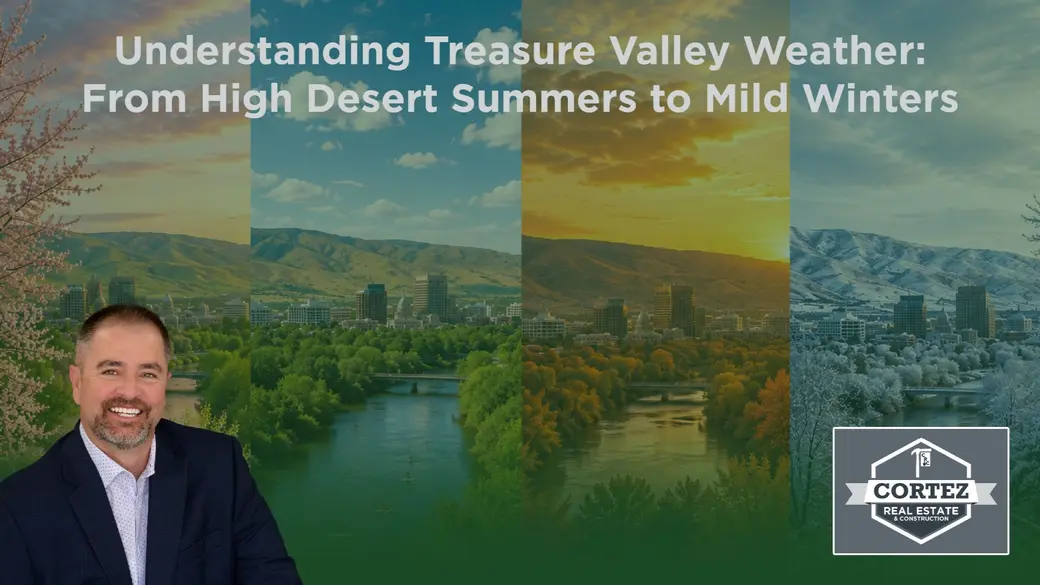
When you mention moving to Idaho, most out-of-state friends and family will picture the same thing: endless pine trees, remote cabins, and six months of freezing, snow-covered winters.
That imagery might be accurate for the high Rocky Mountains of central Idaho, but it is entirely incorrect for the Boise metro area. The Treasure Valley sits in a unique geographic bowl that creates a distinctly different climate.
If you are packing your bags for Boise, Meridian, or Nampa in 2026, here is the honest truth about our weather: it is a high-desert climate that features four distinct seasons, remarkably low humidity, and winters that are far milder than you think.
1. The High Desert Summer: Dry Heat and Cool Nights
Summers in the Treasure Valley are hot, dry, and incredibly sunny. From late June through early September, you can expect nearly cloudless skies and afternoon high temperatures consistently in the 90s, with occasional streaks of triple-digit heat in July and August.
However, coming from a coastal or southern state, you will notice two massive differences in how that heat actually feels:
- The Humidity is Nonexistent: The Treasure Valley is semi-arid, receiving only about 11 to 12 inches of total precipitation a year. During the hottest part of a summer afternoon, humidity levels frequently plummet to 15% to 25%. Without the oppressive, suffocating moisture of the South or Midwest, 95 degrees in Boise feels surprisingly comfortable in the shade.
- The Rapid Evening Cool-Down: Because desert air does not hold heat, the temperature drops dramatically the moment the sun goes down. A blistering 98-degree afternoon will often drop 30 degrees to a perfect, breezy 65 degrees by the time you go to bed.
2. The Truth About Treasure Valley Winters
This is where the biggest misconceptions lie. The Treasure Valley is not an alpine winter wonderland.
- The Mountain Shield: The Rocky Mountains to the east act as a massive geological barrier, blocking the brutal, below-zero Arctic air masses that freeze the Midwest and the Dakotas.
- The Snowfall: The valley floor only averages around 20 inches of snow for the entire year. More importantly, because daytime highs in January frequently hover in the upper 30s or low 40s, whatever snow does fall typically melts off the roads and driveways within a few days. You will rarely spend your winter mornings shoveling out your car.
3. The Winter "Inversion"
While you will not be buried in snow, you do need to prepare for the Treasure Valley's most unique weather phenomenon: the winter inversion.
During December and January, cold, stagnant air often gets trapped on the valley floor underneath a layer of warmer air above. This acts like a lid, trapping fog, clouds, and woodsmoke in the valley for days or even weeks at a time.
During an inversion, the valley is remarkably gray and chilly. However, because the clouds are low, you can completely escape them by driving 45 minutes up the mountain to Bogus Basin. You will break through the cloud layer into brilliant sunshine and warmer temperatures.
4. Spring and Fall: The Golden Seasons
While summer and winter dominate the conversation, spring and fall are the undeniable highlights of the Treasure Valley calendar.
- Spring (March to May): As the foothills turn a vibrant green and the snow melts off the peaks, the valley comes alive. Temperatures hover in the 60s and 70s—perfect for early-season mountain biking and patio dining along the Greenbelt. Spring is also our wettest season, though rain storms are usually brief.
- Fall (September to November): Idaho experiences a true, vibrant autumn. The massive, mature trees in downtown Boise and the older Meridian neighborhoods turn brilliant shades of orange and red. The crisp 65-degree days stretch well into October, extending the outdoor recreation season long past what many out-of-state buyers expect.
Pack for the Lifestyle
Living in the Treasure Valley means you need a wardrobe and a garage equipped for all four seasons. You will need your paddleboard in July and your ski jacket in January, but you will not need to survive an Arctic tundra.
If you are ready to trade the coastal humidity for the high-desert sunshine, contact Oscar Cortez today. We can talk about which neighborhoods get the most summer shade, where to store your winter gear, and how to find the perfect home for your 2026 move.
Categories
Recent Posts











"My job is to find and attract mastery-based agents to the office, protect the culture, and make sure everyone is happy! "